
This is the third post in my ABCs of Writing series: Post C
I started rock climbing two years ago and, to my surprise, found a physical activity I truly enjoy. (Crazy, coming from a stereotypically sedentary writer, I know). I appreciate climbing because it requires both physical and mental fortitude. I also like that you can objectively tell when you’re improving: You become strong enough to make more difficult, powerful moves; you have the stamina to climb more routes each session; you can actually do a pull-up for the first time in your life. All the good stuff.
I’ve thought a lot about climbing over the past two years, and realized it has taught me a lot about writing. I’ve pulled together a few of these lessons in the post below.
Use your tools.
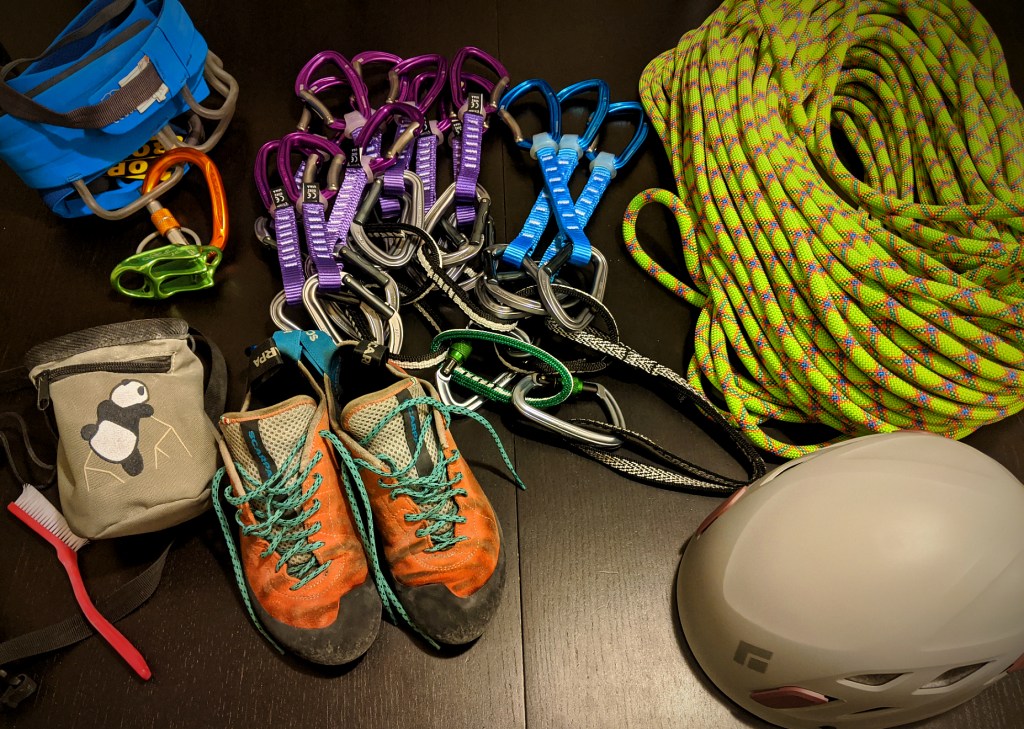
I love climbing gear. Ropes, carabiners, chalk bags, shoes—you name it. I love how colorful and new and shiny everything is when you first purchase it, and then I love how it gets scratched up and dirty when you take it out on the rock, proof that you actually use it. Writers, also, obviously, use tools that range from the physical, like a pen and paper, to the mental, like word association or story prompts. In terms of physical tools, I’m partial to a laptop, although I did write the bulk of my first novel on a manual typewriter. (Check out my Contact page if you want to see it.)
I love buying physical writing tools (you should see my journal collection), but I often find myself resistant to using the mental tools of a writer. (Odd, I know, coming on the heels of my previous post.) I often feel that I should be self-reliant enough, creative enough, inspired enough to never use lists of story prompts or brainstorming techniques. I think—naively, of course—that phenomenal bestselling stories should sprout from my fingertips of their own volition. It’s times like these that I remind myself: I’d never climb a wall without my harness and rope (no, I’m not Alex Honnold), so I shouldn’t neglect my writing tools either.
Someone else’s beta doesn’t have to be your beta.
I’m going to throw some climbing lingo at you now. When a climber asks someone for beta, she’s looking for hints on the right sequence of moves to send the route (complete without falling or relying on the rope). Go to any climbing gym or crag, and you’ll hear climbers discussing in intricate detail how to position their body weight, which holds will offer the best grip, the right sequence of foot moves. It’s amazing how long a conversation about hip rotation can last.
Beta for writers is as readily available. Everyone has tips and tricks, formulas that hold the secret to publishing the next bestseller. But here’s the thing about beta: It isn’t one-size-fits-all. If you ever climb with me and my taller, stronger husband, you’ll hear us argue regularly about how I can’t make his powerful moves and he can’t contort his body into my more flexible positions. Like climbing beta, I’ve found that a lot of writing advice just doesn’t work for me. I’m sure it was great for the writer who swears by it, but not for me. And, here’s the key, that’s okay. You don’t have to follow every piece of writing guidance you hear (which is rather funny coming from a person whose blog is all about giving writing advice). As in climbing, find the writing beta that works for you.
Cheering on others helps you improve.
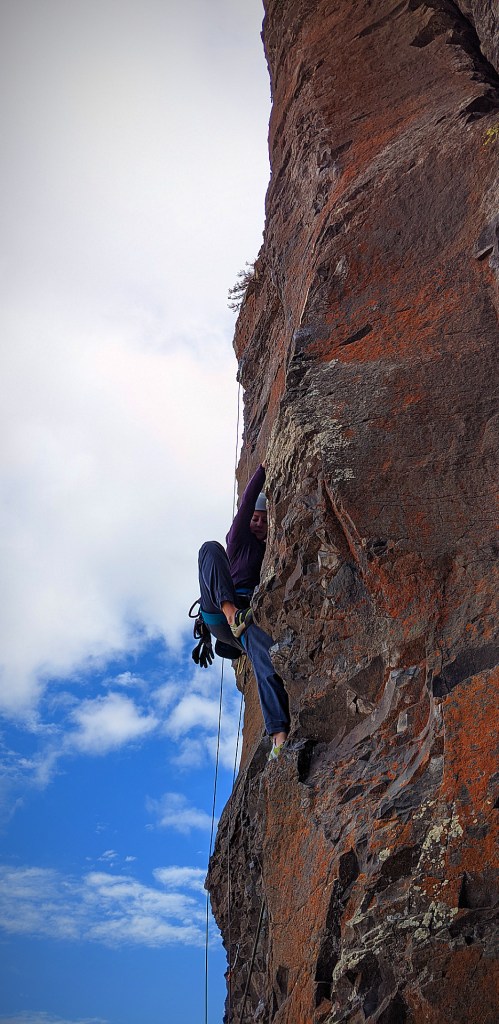
One of my favorite things about the climbing community is how the majority of climbers are so encouraging to one another, even if they’re complete strangers. When I first started going to the gym, I was incredibly intimidated by all of the amazing climbers. I’d fail to finish a v0 (the least difficult grade for a bouldering route), and nearby some guy with rippling muscles easily powered up a v6. A few minutes later, I’d attempt that v0 again, and I’d hear the v6 climber on the ground, cheering me on. I found that once I started cheering on climbers who were both more or less skilled than me, it improved my mindset and actually made me a better climber.
I remind myself that I am part of a community of writers who share my struggles and that we all need to support each other.
Now, I’ll be the first to admit that I’m not very good at cheering on other writers. When I scroll through twitter and see yet another writer proclaiming they landed an agent or book deal, I usually feel a twist of jealousy rather than joy. In these moments, I remind myself of the climbing camaraderie and send good thoughts their way, maybe drop them a note of congratulations. I remind myself that I am part of a community of writers who share my struggles and that we all need to support each other.
Enjoy the journey.
Although climbing is, in the end, about finishing the route, getting to the top of the mountain, the journey is often as satisfying as the ending. Sometimes, a route has fun, moves that flow seamlessly into one another. On other routes, I’ll find ledges in the exact right spot or a comfortable finger pocket I can use to stay snugged close against the wall.
Writing can (and should) be the same way. I need to stay focused on my end goal, but appreciate the joyful moments along the way, a scene well-written, a clever piece of dialogue.
I dive deeper into thoughts about enjoyment and writing in this post.
Celebrate small victories.
In order to improve, climbers will repeatedly attempt a route or a bouldering problem that’s at the upper limit of their skill until they can send it cleanly. This is called projecting and it can be incredibly challenging, both physically and mentally. When I project a route, my muscles and hands begin to ache, and I often feel like I embody the definition of insanity (doing the same thing over and over again and expecting different results). Writing definitely feels this way to me if I’m stuck on a particularly sticky plot problem or wading through the rejections in the query trenches while trying to land an agent.
Climbing has taught me how important it is in the midst of a project to celebrate the small victories. Some nights at the gym, I may work for hours and only manage one more move than the first time I tried the route. But that’s progress and should be recognized as such. The same goes for writing. Celebrate finishing a first draft, a chapter, even just a scene. It was hard work and you stuck with it. That’s something to be proud of.
Celebrate finishing a first draft, a chapter, even just a scene. It was hard work and you stuck with it. That’s something to be proud of.
I could go on about climbing and writing for ages, but I think this is good enough for now. Leave me a comment if you’re a climber/writer, or if there are any activities you do that have similar writing parallels! Next ABC post: Deleting: Or Killing Your Darlings.



 THE QUILL & THE INKPOT